





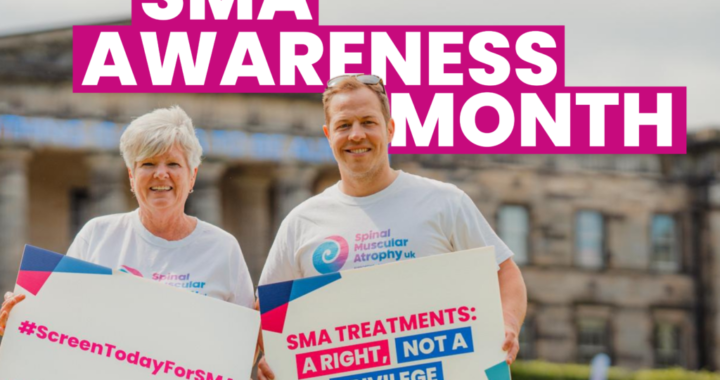
August is Spinal Muscular Atrophy (SMA) Awareness Month, marked in the UK by SMA UK, the country’s dedicated charity for people and families affected by the condition, under this year’s theme “Every Piece of the Puzzle: Celebrating the SMA Community.” According to SMA UK, spinal muscular atrophy occurs in around 1 in 11,000 live births, with an estimated 650 to 1,300 people currently living with the condition across the UK, and roughly 1 in 40 people unknowingly carry the faulty gene that causes it. For families managing a diagnosis most people have never heard of, a month like this is a rare chance to be properly understood.
What SMA actually is
Spinal muscular atrophy is a genetic condition that damages the motor neurons connecting the spinal cord to the muscles, gradually reducing muscle strength and function. It ranges widely in severity, from Type 1, which usually presents in the first months of life and remains one of the most common genetic causes of infant death in the UK, through to milder forms that develop much later in adulthood. What every type shares is that SMA does not affect thinking, learning or the senses. It affects movement, and often breathing and swallowing too.
Why early diagnosis changes everything
– Newer treatments, including gene therapy and disease-modifying drugs such as Spinraza, Risdiplam and Zolgensma, can significantly alter the course of SMA when started early
– Newborn screening for SMA is expanding across the UK, with Scotland recently joining the rollout, meaning more babies are diagnosed before symptoms even appear
– SMA UK’s SpotSMA campaign trains health visitors and community practitioners to recognise early warning signs
– Delays in diagnosis can mean the difference between a child reaching milestones such as sitting or crawling and losing that opportunity altogether
Living with SMA day to day
– Physiotherapy and equipment such as wheelchairs, standing frames or ventilators to maintain strength, posture and independence
– Careful management of feeding and swallowing, sometimes including tube feeding
– Close coordination between neurologists, respiratory teams, physiotherapists and community carers
– For adults living with SMA, ongoing support to stay independent at work, at home and in relationships, not just to manage symptoms
The weight carried by families
Behind every SMA diagnosis is a family learning a new language of appointments, equipment and vigilance, often while still coming to terms with what the diagnosis means for their child or loved one. Many parents describe becoming experts in a rare condition almost overnight, coordinating care across multiple specialists while trying to preserve as normal a childhood, or adulthood, as possible for the person they love.
How we can help
At Synergy Complex Care, we support people living with SMA and other complex neuromuscular conditions to remain at home, surrounded by family rather than institutional walls. Our care teams are trained in the practical realities of SMA care, from safe moving and handling to ventilation and tracheostomy support, feeding equipment and physiotherapy routines, and we work closely with neurology and respiratory teams to keep care consistent and well informed. We know that behind every care plan is a family who has already learned more about their loved one’s condition than most people will ever need to, and we build our support around that expertise rather than in spite of it.
This SMA Awareness Month, if you are supporting a loved one living with spinal muscular atrophy and would like to talk about care that fits around your family’s life, we would love to hear from you.